Learn Coffee

Our Roast Process — Green Bean to Your Cup

The roast is where flavour is unlocked — not created. The origin and process set the ceiling. We try to hit that ceiling every time: building profiles around each coffee's character, not forcing everything into one "house" taste. Here's how it actually works.

Small-batch, profile-driven roasting means every lot gets treated as its own project — different moisture, different density, different flavour goal. Eight steps from green intake to QC cup, and every batch either passes or gets pulled.

Small batch Profile-driven QC every roast Three roast levels
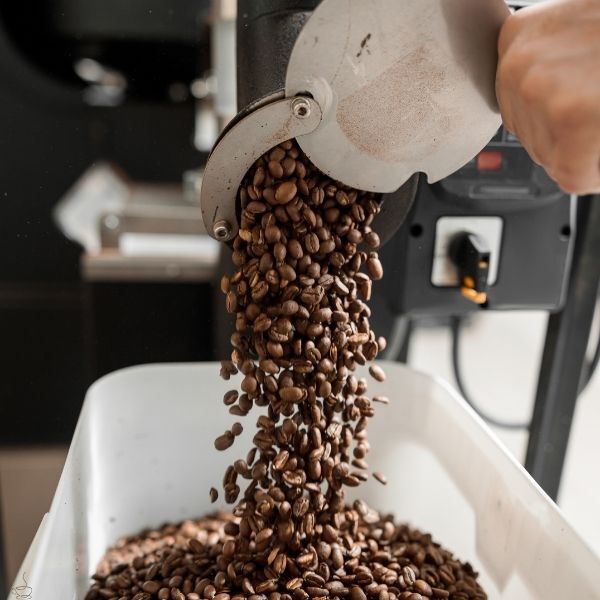
Freshly roasted coffee beans cooling in the tray — steam rising, deep golden-brown colour
Post-roast cooling — locking in flavour before packaging or cupping.
At a Glance

Roasting at a Glance

Every coffee is different. We build profiles around origin and process — preserving character, not flattening it into a "house" flavour.

Green coffee bags being received and logged at intake
Receiving & Sorting
Roast profile planning at the control panel
Profile Planning
Freshly roasted coffee cooling and resting
Cooling & Resting
The Process

8 Steps — Green Bean to Finished Roast

From receiving a bag of unroasted green coffee to clearing it for your bag. Steps 5 and 6 are where roast level is defined.

Inspecting green coffee at intake
Intake

Green Coffee Intake

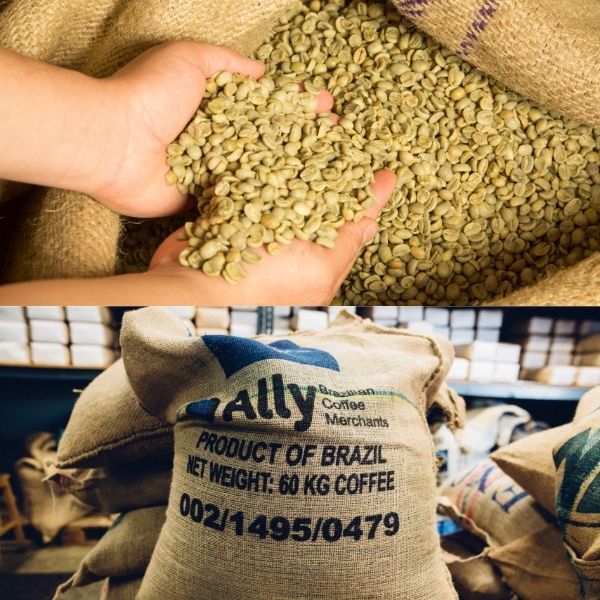
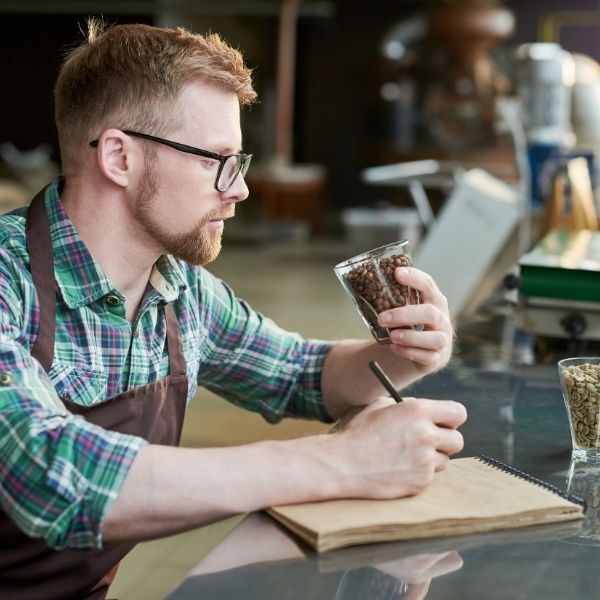
Every lot is logged and checked for moisture, density, and screen size. These physical properties shape how the bean behaves in the drum — a denser bean needs more energy, a wetter bean needs more drying time early. This data goes straight into the profile.
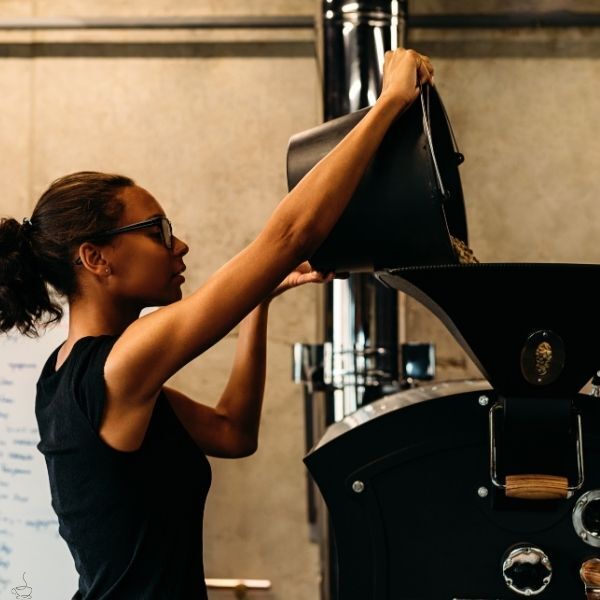
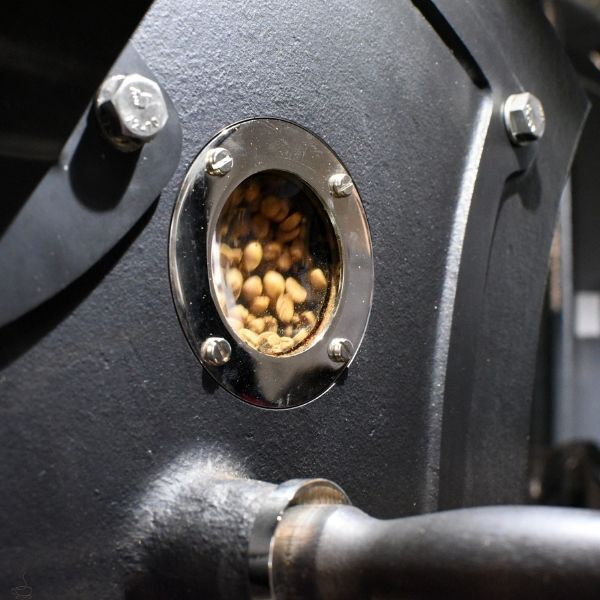
Designing roast curve profiles at the control panel
Planning

Profile Planning

Profiles are designed around origin, process method, and intended use — single origin, blend base, espresso component. Gas and airflow are dialled ahead of the session to target a flavour outcome, not just a colour reading.

Charging the roaster drum with green coffee
Charge

Charge & Turning Point

Beans hit the pre-heated drum ("charge") and the probe temperature dips as cold beans absorb heat, then climbs. The Turning Point — where temp begins rising again — is our first confirmation the roast is tracking the planned curve.

Coffee through the Maillard browning phase
Browning

Maillard & Caramelisation

Sugars brown and hundreds of aromatic compounds form. Rate-of-rise control is critical here — too fast and the outside chars before the inside develops; too slow and beans taste baked and flat. This phase builds structural sweetness and body.

Coffee beans at first crack — expanding and cracking
Key Moment

First Crack

Internal pressure builds until beans audibly crack and visibly expand. This is the start of the development window — the earliest point at which coffee is drinkable. We mark the exact time and temperature of first crack on every single roast.

Monitoring development colour in real time
Key Moment

Development Time

From first crack to drop: shorter development preserves brightness and origin clarity; longer deepens caramelisation and body. We never push into ashy territory. Development time ratio is tracked as a percentage of total roast time on every batch.

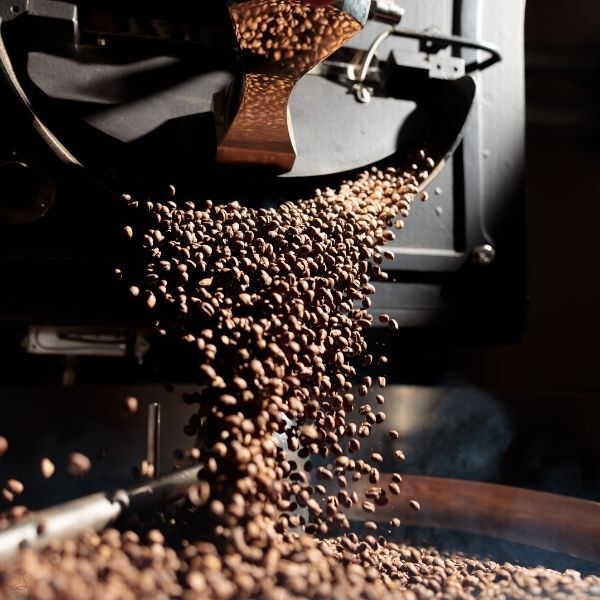
Coffee dropping from roaster and cooling rapidly
Finish

Drop & Cool

At target colour and temperature, beans drop into the cooling tray and are stirred rapidly. Slow cooling continues the roast beyond the intended endpoint — baked, flat notes are almost always a cooling problem, not a roasting one.

Cupping freshly roasted coffee for QC
QC

Rest & QC Cupping

Beans off-gas CO₂ for 18–72 hours before cupping. We blind-taste every roast against the benchmark profile. If sweetness, clarity, body, or finish is off, the roast doesn't ship. No exceptions.

Steps 5 and 6 — first crack and development time — are where roast level is determined. Everything before sets the stage; everything after locks in the result. Two coffees can reach the same colour reading via very different paths and taste completely different from one another.

The Result

Roast Levels & What They Mean for Your Cup

Roast level is the biggest flavour variable after origin. Light isn't "better" than dark — they're different tools for different preferences and brew methods.

Light

High clarity, origin-forward

  • Highest acidity and brightness
  • Juicy, fruit-forward sweetness
  • Origin character fully preserved
  • Best for pour over and filter
  • Lower body, more clarity

Medium

Balanced — our most versatile roast

  • Sweetness, body, and acidity in balance
  • Versatile across drip, espresso, French press
  • Caramel notes emerge without dominating
  • Our default sweet spot for most coffees
  • Crowd-friendly and consistent

Medium-Dark

Roast character leads, deep comfort

  • Deeper caramel, cocoa, toasted nut
  • Lower acidity, heavier body
  • Built for milk drinks and cold brew
  • Never smoky or ashy at this level
  • Holds well under espresso pressure
Quality Control

QC & Cupping

Every roast is evaluated before it ships. If a batch misses the target profile on the cupping table, it doesn't become your morning coffee. Simple as that.

Consistency Tracking

Roast curves, colour readings, and extraction results are logged per batch and compared against the benchmark profile — not just the last run.

Blind Cupping

Multiple tasters evaluate sweetness, acidity, body, and finish. Cups are coded — we don't know which batch we're tasting until after scoring is complete.

Brewer Dial-In

We test on real home and commercial setups — your Chemex, your espresso machine, your French press — not just ideal lab conditions.

FAQ

Roast Process — Common Questions

As beans absorb heat, internal water vapour and CO₂ build pressure until cell walls rupture — producing an audible crack around 385–400°F (196–204°C). This is first crack.

It matters because it marks the start of the development window: the earliest point where a roast is drinkable. Light roasts drop shortly after; medium and medium-dark extend further. The timing relative to first crack is one of the most critical decisions in profile design.

Development time is the interval between first crack and when beans are dropped. Often expressed as a development time ratio (DTR) — the percentage of total roast time spent in development.

Shorter development preserves clarity, brightness, and origin character. Longer development deepens caramelisation and builds body. Most specialty roasters work in a DTR of 18–26% depending on the coffee's intended outcome.

Immediately after roasting, beans are saturated with CO₂ that escapes rapidly over the first 24–72 hours. If you brew before adequate degassing, the gas interferes with water contact and extraction, producing a hollow or uneven cup.

For filter brewing, 5–14 days post-roast is optimal. For espresso, 10–21 days often produces better consistency and sweetness. The roast date on the bag is your real freshness guide.

Not meaningfully. Caffeine is heat-stable — roasting doesn't significantly degrade it. The difference in caffeine between a light and dark roast of the same coffee is negligible.

The perception of "stronger" from dark roasts comes from bolder, more intense flavour, not actual caffeine content. If anything, light roasts have marginally more caffeine by weight because the bean hasn't lost as much mass — but the difference is trivial in practice.

Colour-based roasting uses a colorimeter to hit a target Agtron reading — consistent, but it doesn't account for how different coffees develop flavour along the way to that colour.

Profile roasting tracks the full temperature curve — charge temp, turning point, rate-of-rise, first crack timing, DTR, and drop temp — adjusting in real time to match a curve built for that specific coffee. Two coffees can reach the same colour via different paths and taste completely different. Profile roasting controls the path, not just the endpoint.

Sealed, opaque container at room temperature — away from heat, light, and moisture. The fridge introduces condensation. Freezing only helps for long-term storage of unopened, vacuum-sealed bags you won't touch for a month or more.

The biggest single improvement: grind immediately before brewing. Ground coffee loses flavour measurably within hours. A decent burr grinder does more for your cup than any other single upgrade.

Last updated:  ·  Learn Hub  ·  Shop Coffee