
Step 1
Wither & Sun-Dry
Leaves wither slowly — often outdoors in sun — to begin moisture loss and start enzymatic activity. This softens the leaf and starts to unlock aromatic compounds.
The most interesting thing about oolong: it's not a single style — it's a whole spectrum. A lightly oxidized Taiwanese oolong tastes closer to green tea. A heavily roasted Wuyi rock oolong tastes almost like dark chocolate and charcoal. Same category, wildly different cup.
Oolong sits between green and black — partially oxidized, which means the tea maker decides exactly how far to push it. That decision creates everything from floral and creamy to roasted and mineral. It's the category where craft matters most.
The wide temp and time ranges aren't a cop-out — they reflect oolong's real spectrum. Light green-style oolongs need cooler water; dark roasted oolongs take boiling. Start here and adjust to your style.
Oolong can be anywhere from 15% oxidized (almost green) to 85% oxidized (almost black). That range produces more flavour variety than any other tea category. Knowing where your oolong sits tells you how to brew it.
Partial oxidation: the scale that defines every oolong
Floral, creamy, buttery. Closest to green tea. Taiwan's High Mountain and Alishan oolongs — brew cooler, shorter steep.
Stone fruit, honey, orchid. The "classic" oolong character — balanced complexity. Dong Ding and most Taiwanese styles.
Caramel, toast, dried fruit, earth. Much bolder body. Traditional Dong Ding, Da Hong Pao — brew hotter, longer.
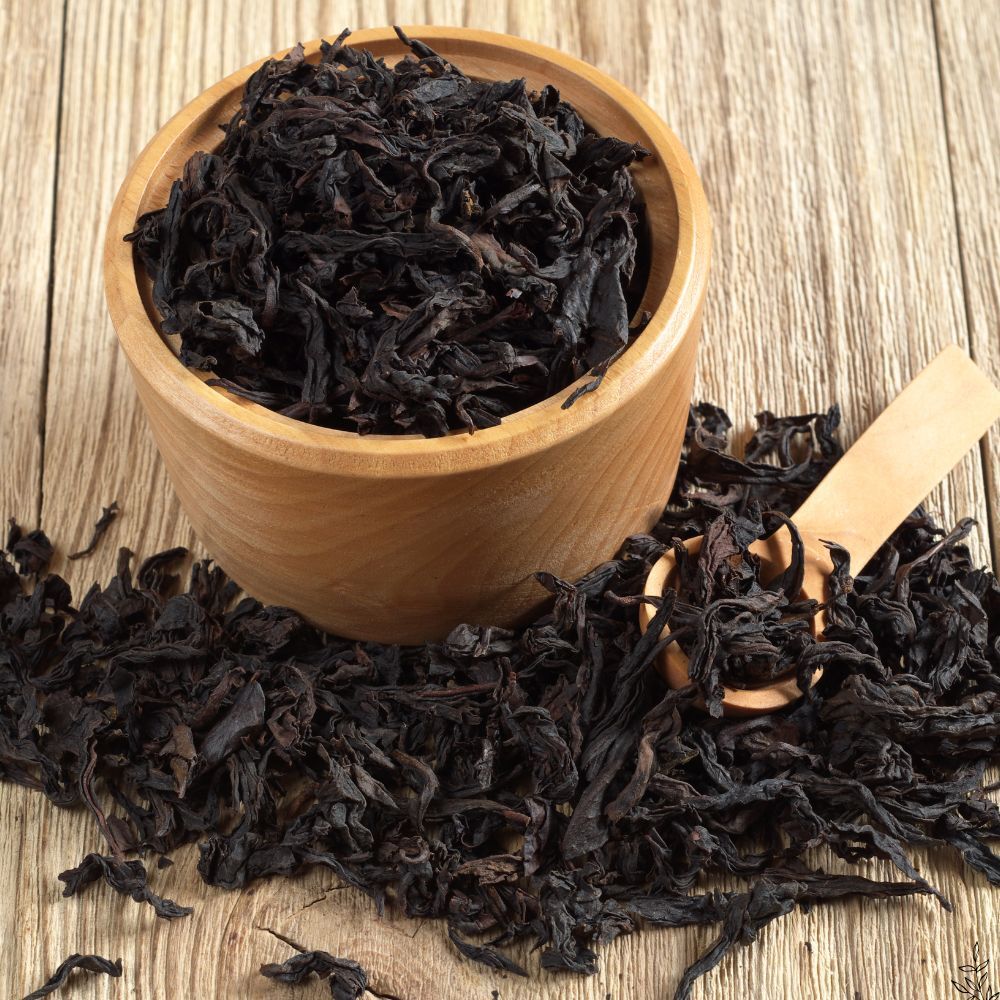
Dark chocolate, charcoal, minerals, smoky finish. Wuyi rock oolongs from China's Fujian province. Near-boiling water only.
Same plant as every other tea. The distinction is in when and how oxidation is stopped — and how much rolling, shaping, and roasting the leaf goes through before it's finished.
Leaves wither slowly — often outdoors in sun — to begin moisture loss and start enzymatic activity. This softens the leaf and starts to unlock aromatic compounds.

Leaves are repeatedly tossed or tumbled — this bruises the edges while leaving the centre intact. Oxidation starts only at the bruised parts, creating oolong's signature partial oxidation pattern.

The tea maker watches the leaves closely and stops oxidation at exactly the right moment with heat — anywhere from 15% to 85% oxidized. This is the defining decision that determines the tea's entire character.

Leaves are rolled into tight balls or twisted strips, then optionally roasted over charcoal. The roast level dramatically changes the final flavour — adding depth, caramel, and mineral notes that light oolongs don't have.
In plain English: oolong is where the tea maker shows their hand. Every other tea type follows a relatively fixed process — black is fully oxidized, green isn't oxidized at all. Oolong is the open question. The same leaf, processed by two different makers, can produce completely different teas.
Most oolongs fall into one of these two camps. The flavour and brewing approach are different enough that it's worth knowing which one you're reaching for before you brew.

Taiwanese High Mountain, Alishan, Milk Oolong, Jin Xuan
Light oolongs are the crowd-pleasers — floral, buttery, sometimes with a natural cream or orchid quality. They unfurl dramatically from tight little balls as they steep, and reward multiple re-steeps with evolving layers.

Wuyi Rock Oolongs (Da Hong Pao, Shui Xian), Traditional Dong Ding, Phoenix Dancong
Dark oolongs are the ones that make people who think they don't like tea change their minds. Charcoal roasting adds caramel, dark chocolate, and smoky mineral notes over a stone-fruit foundation. Bold enough to be satisfying without milk.
Not sure which you have? Look at the dry leaf. Tightly rolled balls that are bright green to golden = light oolong. Twisted dark brown or black strips = dark/roasted oolong. When in doubt, start cooler — you can always re-steep with hotter water on a subsequent infusion.
The oolong world is deep — but these six names come up constantly. Know what they are and you can navigate any tea menu or specialty shop with confidence.

Grown above 1,000m on Taiwan's Alishan range. Tightly rolled, floral, buttery — with a cool-climate sweetness that's hard to find elsewhere.

A cultivar — not artificially flavoured. Jin Xuan produces a natural creamy, milk-like sweetness that surprises everyone the first time they taste it. The crowd-pleaser of the oolong world.

Taiwan's most traditional oolong — ranges from lightly roasted (honey-fruit) to heavily charcoal-fired (caramel, roasted walnut). The roast level defines which version you have.

"Big Red Robe" — the most famous Wuyi rock oolong from Fujian province. Deep mineral, charcoal-roast character with a long, warm finish. One of the most complex teas in the world.

"Iron Goddess of Mercy" — one of China's most famous teas. Modern versions are lightly oxidized and floral; traditional versions are roasted with a warm, orchid-toast character. Both are exceptional.

From Guangdong province — incredibly aromatic, with naturally occurring flavour profiles named after what they smell like: Duck Shit (yes, really), Honey Orchid, Almond. Each tree is harvested individually.
Western brewing (one long steep) works fine for oolong. But Gongfu brewing — many short infusions with a small pot or gaiwan — is how oolong was designed to be drunk. It unlocks layer after layer of flavour that a single steep never could.
You don't need a Gongfu set to try this method. Any small teapot, a French press used backwards, or even a mug with a lid and a strainer will get you close enough to the real thing. The key principle is: less water, shorter steeps, more infusions.