
Step 1
Harvest
Young leaves and buds are hand-picked. The earlier in the season, the more delicate and sweet the result — first-flush greens are prized for their clean sweetness.
The single most important rule: never pour boiling water directly onto green tea. That's what makes it bitter and grassy — not the tea itself. Drop to 160–175°F (71–79°C) and the same leaf tastes clean, sweet, and smooth.
Green tea skips full oxidation, which means it keeps its fresh, grassy character and a gentler caffeine feel. The catch is that it's more sensitive to heat and steep time than black tea — but once you know those two numbers, it's one of the easiest teas to enjoy every day.
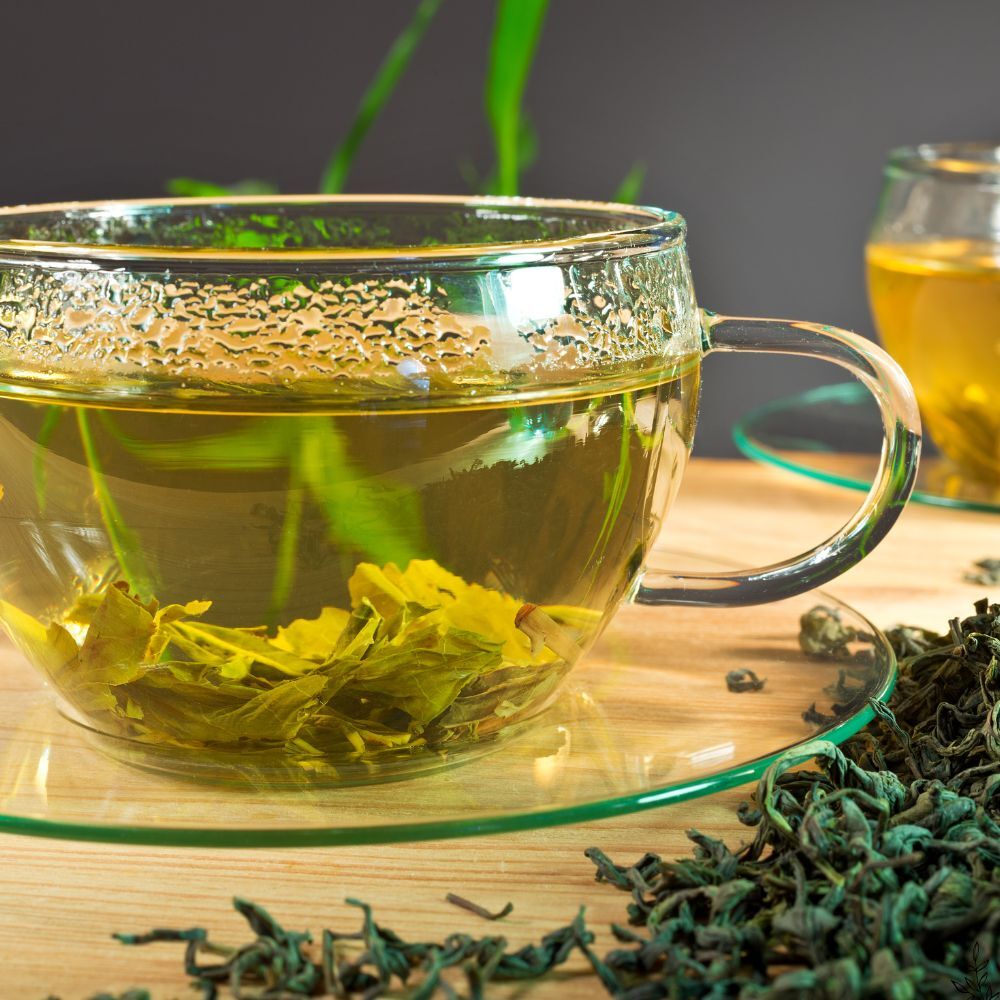
Temperature first. Everything else is a secondary adjustment. Get these numbers right and most green teas reveal exactly what they were meant to taste like.
Same plant as black tea. The critical difference is one step that's deliberately skipped — oxidation. By stopping the process early, green tea keeps its fresh, plant-forward character.
Young leaves and buds are hand-picked. The earlier in the season, the more delicate and sweet the result — first-flush greens are prized for their clean sweetness.

The defining step — heat is applied almost immediately after harvest to stop enzymes from oxidizing the leaf. This locks in greenness, freshness, and a lighter flavour.

Leaves are shaped — twisted, rolled flat, or curled — which affects how they release flavour during steeping and gives each variety its distinctive look.

A final drying locks in moisture and brings out the tea's clean, final aroma. Japanese greens are often steamed (yielding a more vegetal flavour) while Chinese greens are pan-fired (nuttier, toasty).
In plain English: green tea is unfinished tea on purpose. No oxidation means it retains its brightness, its antioxidants, and its sensitivity to heat. Treat it gently and it rewards you with a clean, fresh cup that coffee drinkers consistently underestimate.
Most green teas fall into one of these two families. The brewing approach differs enough that it's worth knowing which one you have before steeping.

Sencha, Gyokuro, Matcha, Genmaicha, Hojicha
Japanese green teas are almost always steamed after harvest — which preserves a deep, vivid green and produces a vegetal, oceanic, umami-rich flavour that can be almost savoury. Gyokuro is shade-grown for extra sweetness and chlorophyll.

Dragon Well (Longjing), Gunpowder, Pi Lo Chun, Bi Luo Chun
Chinese green teas are typically pan-fired in a wok, which creates a toasty, chestnut, lightly roasted quality that feels warmer and less vegetal than Japanese styles. Dragon Well is the benchmark — flat leaves, smooth body, sweet finish.
Not sure which you have? If the dry leaf is bright, almost neon green and smells like fresh-cut grass or seaweed — Japanese. If it's darker, more twisted or pellet-shaped, and smells slightly toasty or hay-like — Chinese. Both are excellent. Neither needs milk or sugar to shine.
You don't need to memorise them all. But these six come up constantly — and knowing what to expect from each one makes choosing (and brewing) a lot easier.

Japan's most-consumed tea. Grassy, slightly sweet, clean finish. The everyday green — forgiving and satisfying.

Shade-grown for 3+ weeks before harvest — produces an intensely sweet, umami-rich cup with almost no bitterness at all. Brew very cool.

Whole-leaf Gyokuro stone-ground into powder. You're drinking the entire leaf — full flavour, maximum antioxidants, intense umami. Whisk in 165–175°F water.

Sencha blended with toasted brown rice — warm, nutty, popcorn-like aroma. More forgiving on temperature than pure Sencha, and incredibly comforting.

China's most famous green tea — flat, smooth leaves with a buttery, chestnut-sweet flavour and clean, lingering finish. A benchmark pan-fired green.

Leaves are rolled into tight pellets that unfurl when steeped. Bolder, more robust than other Chinese greens — slightly smoky with a strong, satisfying finish.
Re-steeping tip: most loose-leaf green teas can be steeped 2–3 times from the same leaves. Each infusion reveals a different layer — the first is usually the most aromatic, the second mellower and sweeter, the third very light. Reduce steep time on subsequent infusions.
What green tea tastes like, and why its caffeine feel is noticeably different from coffee — even when the mg count is similar.

Green tea sits on a spectrum from sweet and floral (Gyokuro, high-grade Sencha) to bold and nutty (Dragon Well, Gunpowder). Vegetal notes are a feature, not a flaw — they're a sign of quality, not bitterness.

Unlike black tea, green tea is too delicate for milk — it would overpower the subtle flavours you're trying to enjoy. Lemon, honey, and fresh mint all work. Honey especially rounds out tannins in slightly over-steeped cups.

Green tea has 25–40 mg of caffeine per cup — less than black tea, far less than coffee. More importantly, its high L-theanine content promotes focused calm rather than stimulated alertness. The combination is often described as "alert without anxious."