Learn Tea

Matcha — The Whole Leaf in Every Sip

Here's the thing nobody says: matcha isn't steeped — it's suspended. You consume the entire ground leaf, not an extract. That one fact explains why it tastes richer, hits differently, and why the grade of your powder matters more than anything else. Start here.

Matcha is shade-grown green tea, stone-ground into a fine powder. When you whisk it with water, you're drinking the whole leaf — not an infusion of it. That's why the caffeine lasts longer, the flavour is more intense, and why a good bowl of matcha tastes nothing like a bad one.

Whole leaf powder Shade-grown for weeks Smooth sustained energy Grade matters a lot
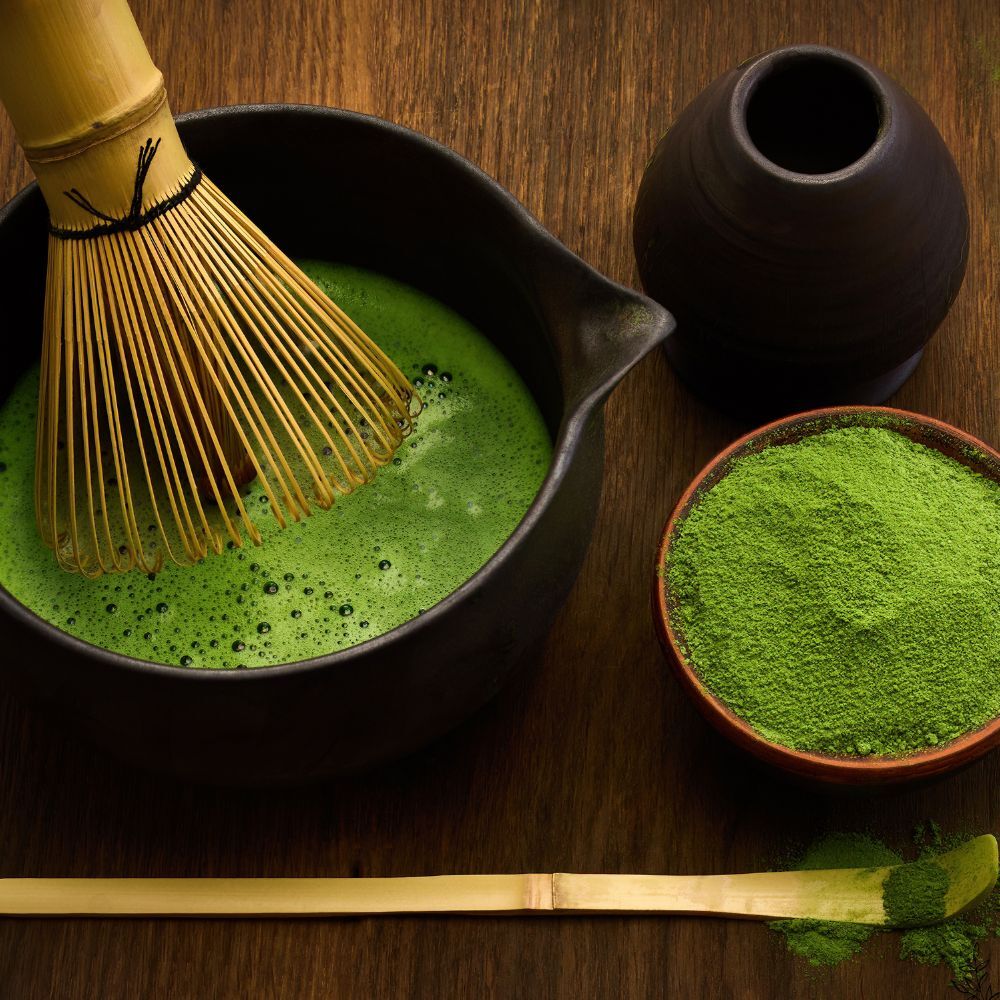
Ceremonial grade matcha — vivid green powder with a whisk and frothy bowl of prepared matcha
Ceremonial grade matcha: vibrant green, no bitterness, creamy foam.
At a Glance

Matcha Brew Reference

Matcha is not steeped — it's whisked. The rules are different from every other tea. Temperature and ratio are the two things that most affect flavour quality.

Water Temp
160–175°F
71–80°C. Never boiling — boiling water kills the delicate amino acids and makes it bitter and flat.
Powder per Bowl
1–2 tsp
1 tsp (2g) for a thinner "usucha" style. 2 tsp (4g) for "koicha" thick matcha. Most people start with 1 tsp.
Water Volume
2–3 oz
For a traditional bowl. Latte-style: 2 oz matcha concentrate + 4–6 oz steamed milk on top.
Whisk Method
W or M
Whisk in a brisk W or M pattern — not circles. 20–30 seconds of active whisking builds the foam.
The Most Important Thing

Ceremonial vs Culinary — Why the Grade Changes Everything

The single biggest factor in how your matcha tastes is the grade. Not the brand. Not the whisk technique. The grade. Here's the difference in plain terms.

Ceremonial grade matcha — vivid green, smooth, fine-milled
Ceremonial Grade

Drink As-Is

First harvest, tencha leaves, youngest shoots

Made from the very first spring harvest — the youngest, most shaded leaves with the highest chlorophyll and L-theanine. Stone-ground to a superfine powder, vivid green, with a naturally sweet, umami-forward flavour profile and almost zero bitterness.

Designed to be prepared with water only — no milk, no sugar. If it needs hiding, it's not ceremonial grade. The flavour should stand proudly on its own.

  • ColourVivid, saturated green — not olive or yellow-green
  • FlavourSmooth, umami-sweet, grassy, minimal bitterness
  • UseTraditional bowl, water only — or high-quality lattes
  • CostHigher — worth it for drinking straight
Umami Sweet-grassy Smooth Creamy foam
Culinary grade matcha — ideal for lattes, smoothies, baking
Culinary Grade

Built for Mixing

Later harvest, more robust, holds up in recipes

Made from leaves harvested later in the season — slightly more bitter, more astringent, and typically olive or yellow-green rather than vivid jade. That sounds negative, but culinary grade is specifically designed to hold its flavour when combined with milk, sugar, or other ingredients.

It's often stronger-tasting than ceremonial, which makes it a better (and more economical) choice for matcha lattes, smoothies, baked goods, and any recipe where the matcha is one component among others.

  • ColourOlive to mid-green — still green, less vivid
  • FlavourBolder, more astringent, holds up in milk/recipes
  • UseLattes, smoothies, baking, cooking
  • CostMore affordable — better value for daily lattes
Bold Astringent Earthy Versatile

Quick rule of thumb: if you're drinking it plain in a bowl or a small cup — use ceremonial. If you're making a latte, smoothie, or baking with it — culinary grade is the right call and the better value. Using ceremonial grade in a latte is like adding a $40 bottle of wine to a pasta sauce.

The Process

How Matcha Is Made — Why It's Different from Every Other Green Tea

All matcha is green tea. But not all green tea is matcha. These four steps are what set it apart.

Tea plants shaded under covers for several weeks before harvest
Step 1

Shade Grow

Matcha plants are covered for 3–4 weeks before harvest. Denied sunlight, the plant produces more chlorophyll and L-theanine — which creates the deep green colour and the calm, focused energy matcha is known for.

Young tea leaves being hand-picked at harvest
Step 2

Pick Young & Steam

Only the youngest, most tender leaves are picked by hand. They're immediately steamed to stop oxidation — preserving colour and delicate flavour — then dried. This is what makes it green tea, not black or oolong.

Removing stems and veins from dried tea leaves to make tencha
Step 3

De-stem & De-vein

Stems and veins are removed by hand — leaving only pure leaf material, called tencha. This is the raw form of matcha before grinding. The quality of tencha selection determines the final grade.

Granite stone mill slowly grinding tencha into matcha powder
Step 4

Stone Grind

Tencha is slowly stone-ground in cool, dark conditions — a single granite mill produces only 30–40g of powder per hour. Heat from faster grinding degrades colour and flavour, which is why hand-milled ceremonial matcha is what it is.

The Technique

How to Whisk a Perfect Bowl

You don't need a bamboo whisk (chasen) to make good matcha — a small milk frother works well. The method is the same either way.

Sift the Powder

Matcha clumps easily. Sift 1 tsp through a fine mesh sieve directly into your bowl or cup before adding any water. This single step eliminates most lumpy matcha problems instantly.

Add Water — Not Boiling

Add 2–3 oz of water at 160–175°F (not boiling — boiling kills the amino acids that create sweetness). A small amount first, then whisk to paste, then add the rest.

Whisk in a W Pattern

Move the whisk in a brisk W or M motion — not circles. Keep the tip near the surface to build foam. 20–30 seconds of active whisking. The bowl should look like a fine green crema on top.

Drink Immediately

Matcha is a suspension, not a solution — the powder settles. Drink within a minute or two of whisking, or give it a brief re-stir before the last few sips. Don't leave it to sit.

No bamboo whisk? A small electric milk frother (the handheld wand type) works perfectly — possibly better for producing fine foam on first try. Blend for 15–20 seconds. Alternatively, shake vigorously in a sealed jar with a tight lid for 20 seconds. Both produce drinkable matcha with good suspension.

Home Bar Build

Iced or Hot Matcha Latte — Three Steps

The key is building a concentrated matcha first, then adding milk — not mixing them simultaneously. That's the move between a grainy, weak result and a creamy café-style cup.

1

Make the Concentrate

Sift 1–1.5 tsp matcha into a cup. Add 2 oz of 165°F water. Whisk or froth until smooth and slightly foamy — no lumps. This is your matcha "shot."

2

Add Milk — Hot or Iced

Hot latte: steam or heat 5–6 oz of milk, pour over the matcha concentrate, and froth the top lightly. Iced latte: fill a glass with ice, add cold milk, then pour the matcha concentrate on top and stir.

3

Sweeten Last

Add sweetener after mixing — honey, simple syrup, or oat milk's natural sweetness often does it alone. Taste first, then adjust. Good ceremonial grade needs very little or nothing.

Oat milk is the classic pairing for matcha lattes — its natural sweetness and creaminess complement the grassy-umami notes without overpowering them. Whole milk works well. Almond is thinner but fine. Coconut is bold and can compete with the matcha.

In the Cup

Flavour Notes & Energy Feel

What good matcha actually tastes like — and why the energy is so different from coffee.

Matcha flavor — umami, sweet, grassy
Flavour

Umami, Sweet & Grassy

Good ceremonial matcha tastes vegetal, umami-forward, and naturally sweet — with a lingering savouriness that builds. Notes of fresh grass, sweet peas, seaweed (in a good way), and sometimes vanilla. Smooth finish, no bitterness.

Umami Sweet grass Fresh pea Creamy
Matcha foam texture — fine, creamy, sustained
Texture

Creamy & Full-Bodied

Because you're drinking the whole leaf, matcha has a distinct body and creaminess that no steeped tea can match. Good whisking produces a fine foam layer on top — the sign of quality matcha well-prepared.

Full-bodied Creamy foam Smooth
Calm focus from matcha — sustained energy without the crash
Energy

Calm, Focused, Sustained

Matcha has significantly more L-theanine than any other tea (from the shading process) — which pairs with caffeine to produce a calm, focused, sustained alertness. No spike, no jitters, no mid-afternoon crash. Noticeable within 30 minutes.

~70 mg caffeine High L-theanine 3–5 hr sustained

Last updated:  · Tea Hub  · Learn Hub